
The Nucleus ARC
Active Resonant Circuit
An emerging energy technology being developed for continuous electricity generation at the point of use.
A New Direction in Distributed Power
The Golden Ratio Inc. is advancing The Nucleus ARC as an experimental approach to localized electricity generation.
The development objective is continuous, standalone operation without conventional fuel combustion, direct solar input, or reliance on external grid power.

Conceptual illustrations depict development objectives, not actual commercial systems.
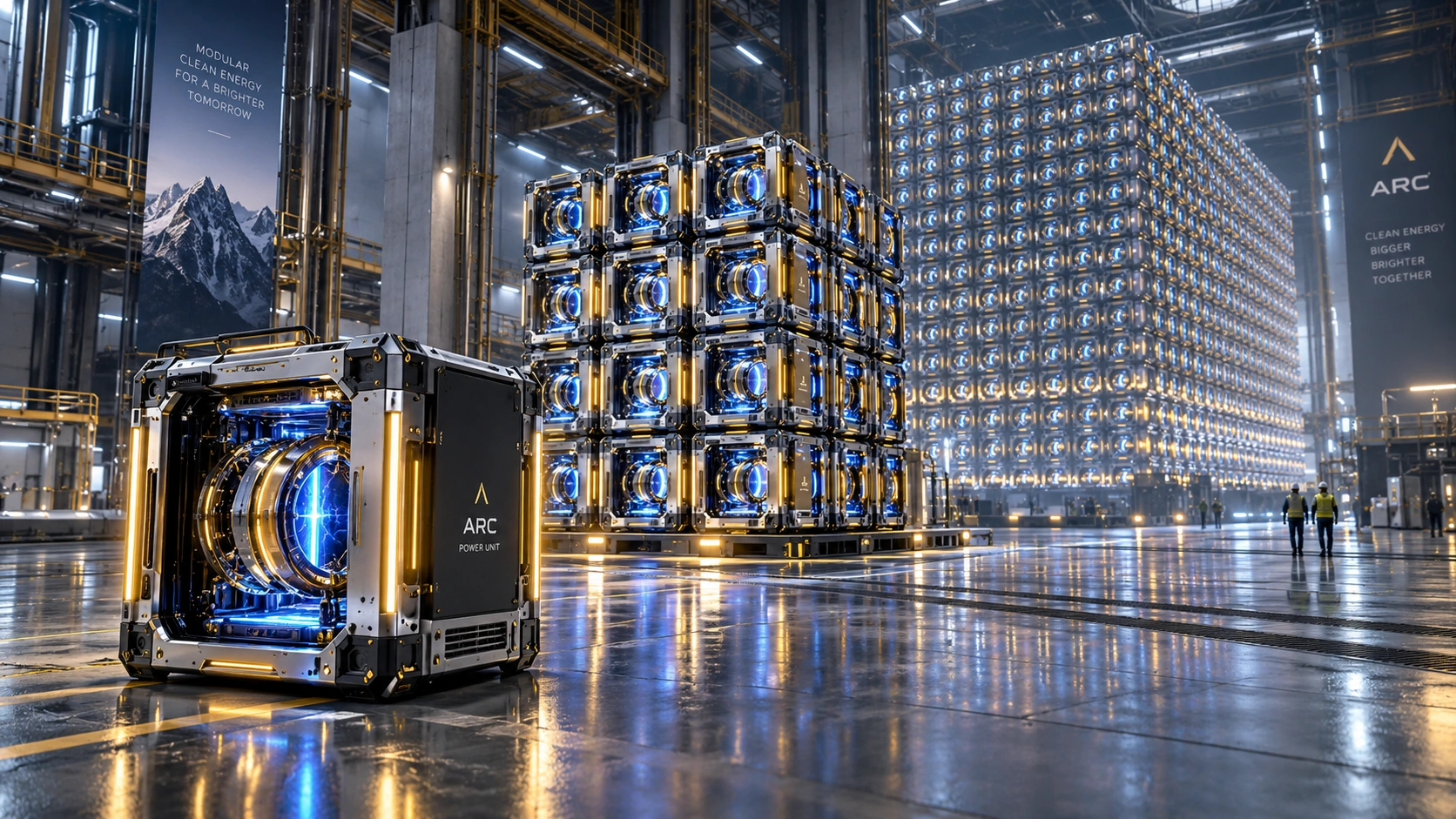
From individual cubic modules to large-scale installations, ARC's modular architecture is designed for progressive expansion.
Conceptual illustrations depict development objectives, not actual commercial systems.
Designed for Scalability
The Nucleus ARC is being developed around a modular architecture that allows individual cubic units to form increasingly larger power systems.
From smaller installations to extensive modular arrays, the architecture is intended to support a broad range of energy requirements, with a development roadmap extending from kilowatt-class applications to multi-megawatt installations.
Advancing Through Verification
The Golden Ratio Inc. is progressing from experimental development toward independently measured performance demonstrations.
Its research program prioritizes reproducible testing, clear performance documentation, and independent validation.

Conceptual illustrations depict development objectives, not actual commercial systems.
From Prototype to Commercial Readiness
Refine the next-generation prototype and document repeatable performance measurements.
Conduct controlled evaluation of the system's standalone power-generation objectives.
Assess system replication, scalability, and future manufacturing readiness.
The Nucleus ARC is an experimental technology. Standalone operation, commercial output, and modular capacity are proposed objectives. The next-generation ARC builds on the V1 proof-of-concept program, which has yielded repeatable, documented observations across 1,136 bench tests, including controlled comparisons of ARC-inserted and bypass configurations. These V1 results provide a substantial experimental foundation for V2 development, expanded performance characterization, and independent evaluation.
CLEAN POWER FOR A BRIGHTER TOMORROW
ADVANCING COMBUSTION-FREE POWER GENERATION FOR A MORE RESILIENT WORLD